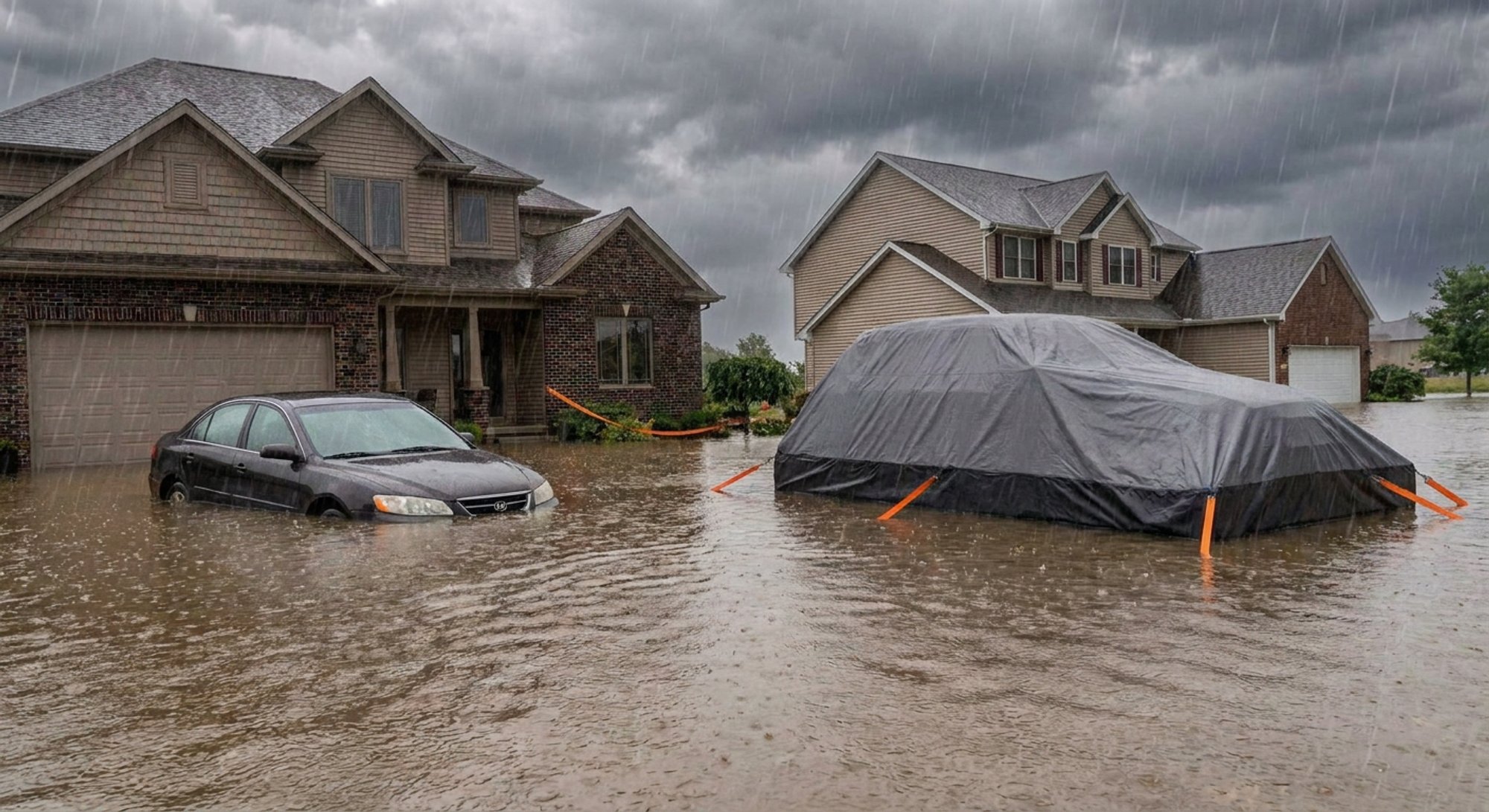
Same street. Same storm.
One of these cars still starts.
One of these cars still starts.
The difference is a mat that was already under the car when the water came.
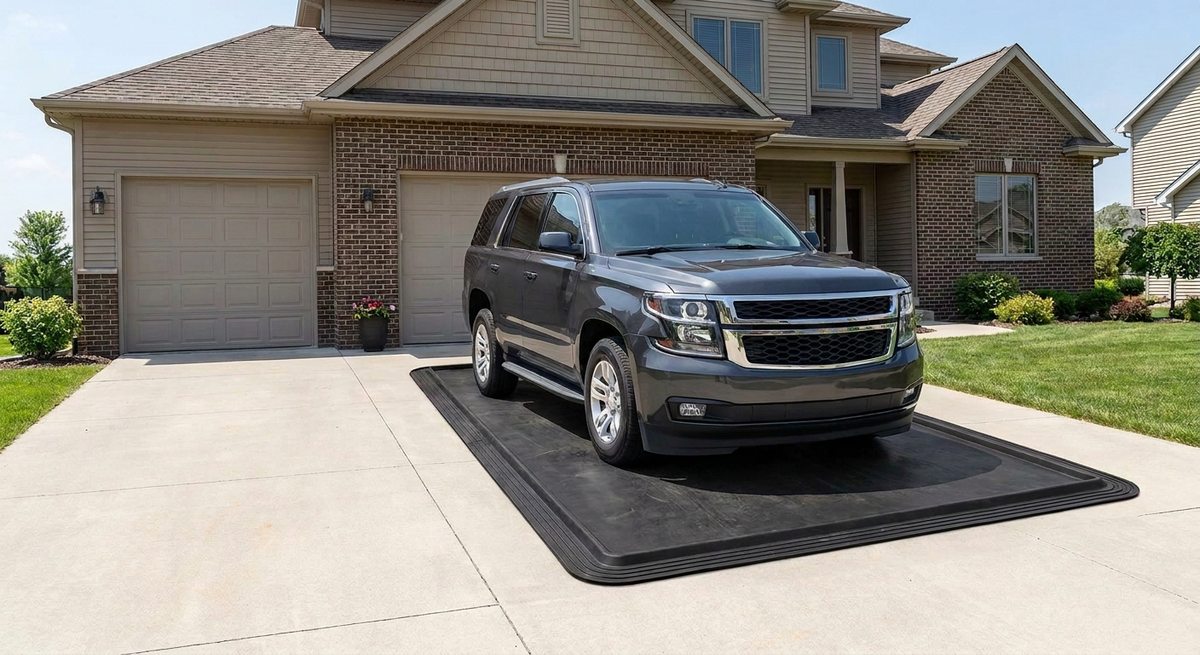
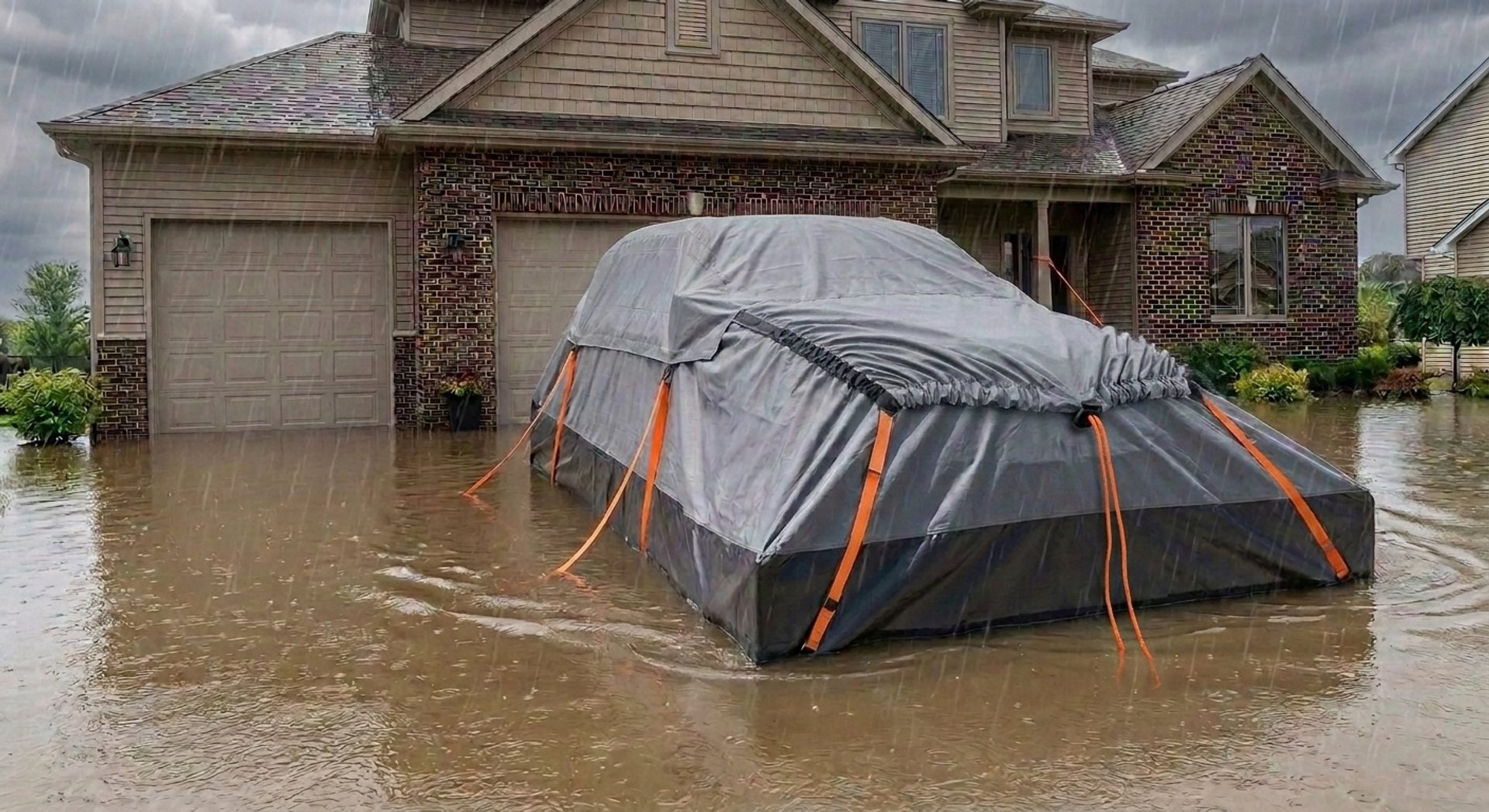
CarRaft is a parking mat with a sealed flood bag folded inside its edges. Pull one cord and the bag rises around your car. Cinch it below the windows, done — and if the flood comes, your car floats above it.
Hurricane Harvey put an estimated half a million cars underwater. A single 2026 storm in Chiba, Japan flooded three thousand in one night. Car flood bags have existed for decades — yet almost nobody owns one, and fewer still have ever deployed one on the night it counted. The reason is not the fabric. It is human behavior.
In the garage rafters, the closet, the trunk. When the warning hits at midnight in driving rain, nobody goes to dig out a 40-pound sheet.
Unfold a tarp bigger than the car, drive onto it, raise the walls, zip the zippers, set the suction cups. Twenty minutes or more, usually two people.
“Is it really going to flood this time?” The cover stays in its box for years — right through the one night it was bought for.
| Conventional flood bag | CarRaft | |
|---|---|---|
| Where it lives | A box in the closet or trunk | Under your car — already installed |
| Setup | 20+ minutes, usually two people | About 3 minutes, one person |
| Seams underwater | Zippers, stitching, suction cups | Welded PVC only |
| The morning after | Fold a huge muddy sheet back into a box | Push the fabric back into the mat |
A car is rarely just a car. It is the commute that pays the mortgage, the school run, the van a small business rides on. When water fills a street at 2 a.m., the people filming it from a second-floor window are not thinking about machinery — they are watching their independence go under, with nothing left to do about it.
CarRaft exists for exactly that moment. Not to fight the flood — to let it pass underneath.
That is the entire invention. The flood bag is already spread under your car, folded into the edges of the mat you park on every day. There is nothing to fetch, nothing to unfold, nothing to drive onto.
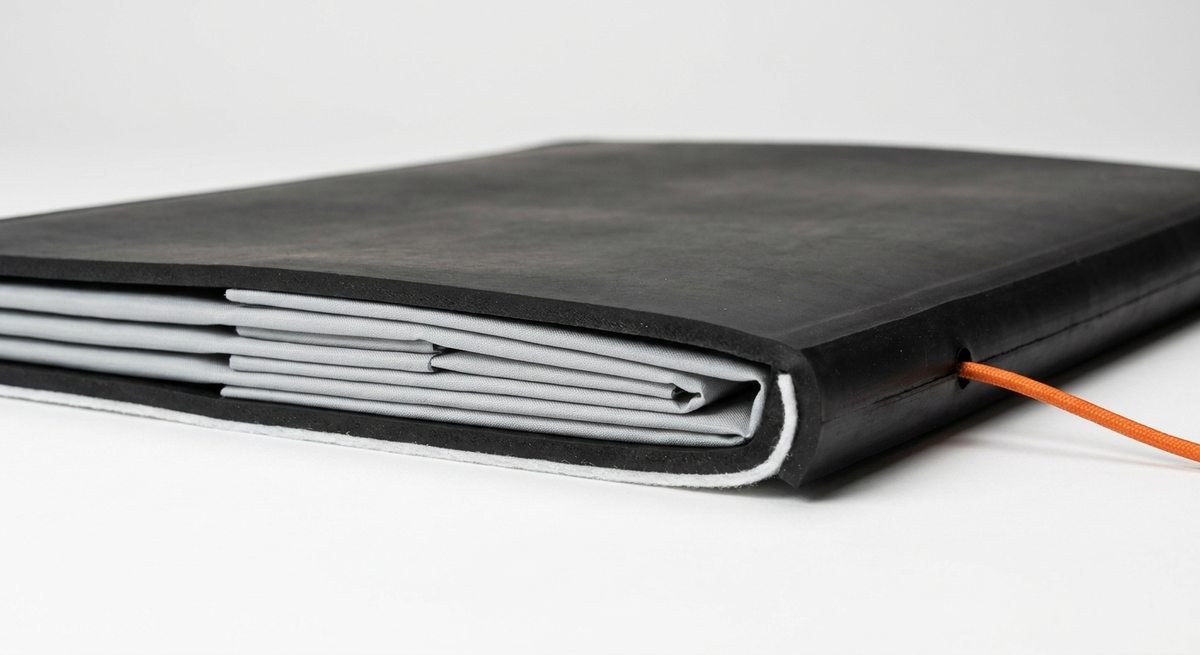
A 15 mm three-piece rubber mat protects your garage floor and hides the entire waterproof bag in its side compartments. You drive on and off it like any parking mat.
STEP 1Park on it, every dayThe bag waits inside the mat's edges, shielded from sunlight and wear until the day it's needed.
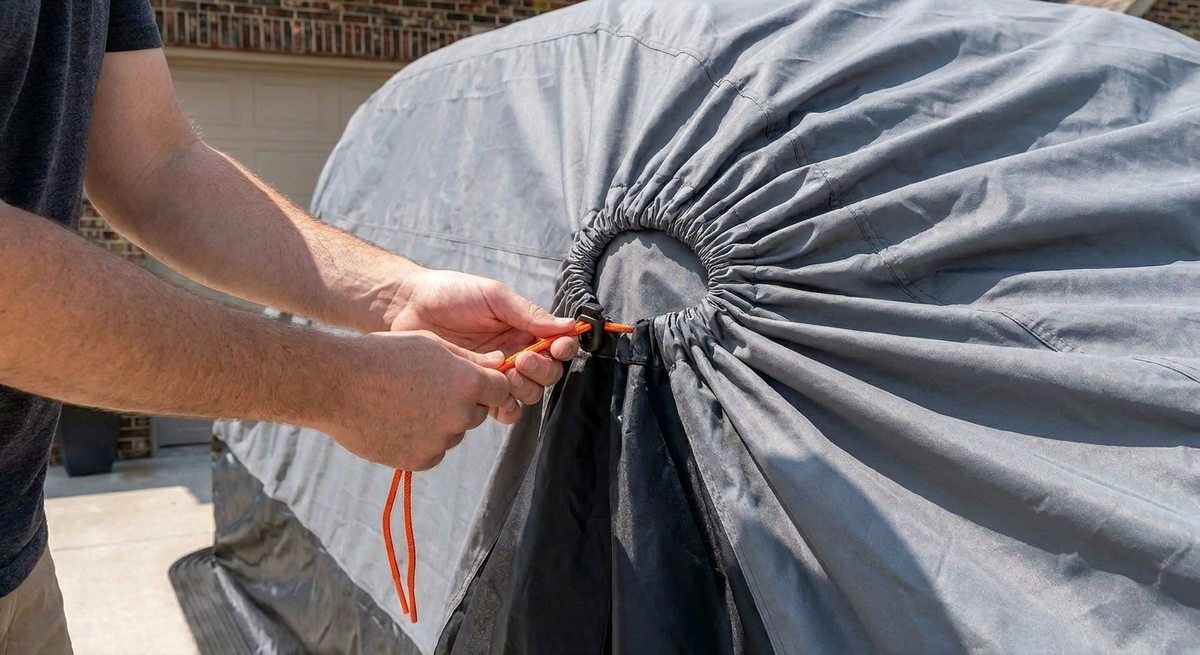
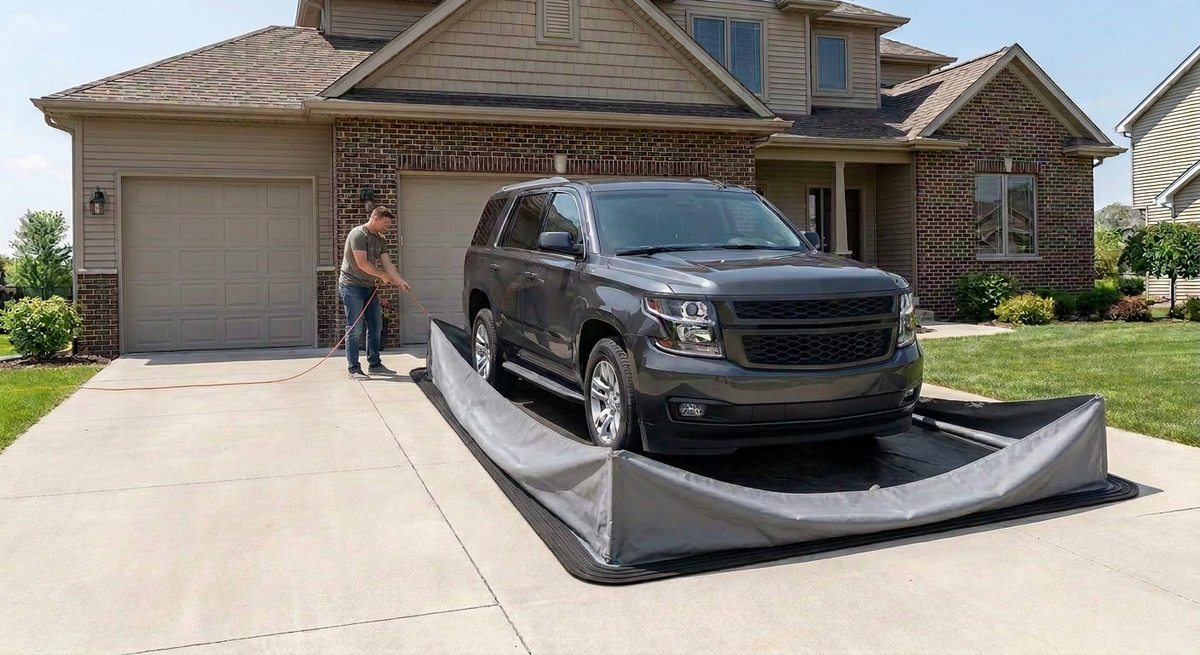 STEP 2Pull one cord
The waterproof bag rises out of the slits on all four sides of the car at once.
STEP 3Cinch, then coverThe drawcord pulls the bag tight below the windows. Then the roof flap goes over the top and fastens on the far side.
STEP 4If the flood comes, it floatsTrapped air lifts the sealed bag — car, mat and all. Straps clipped to the hull's corner D-rings keep it from drifting.
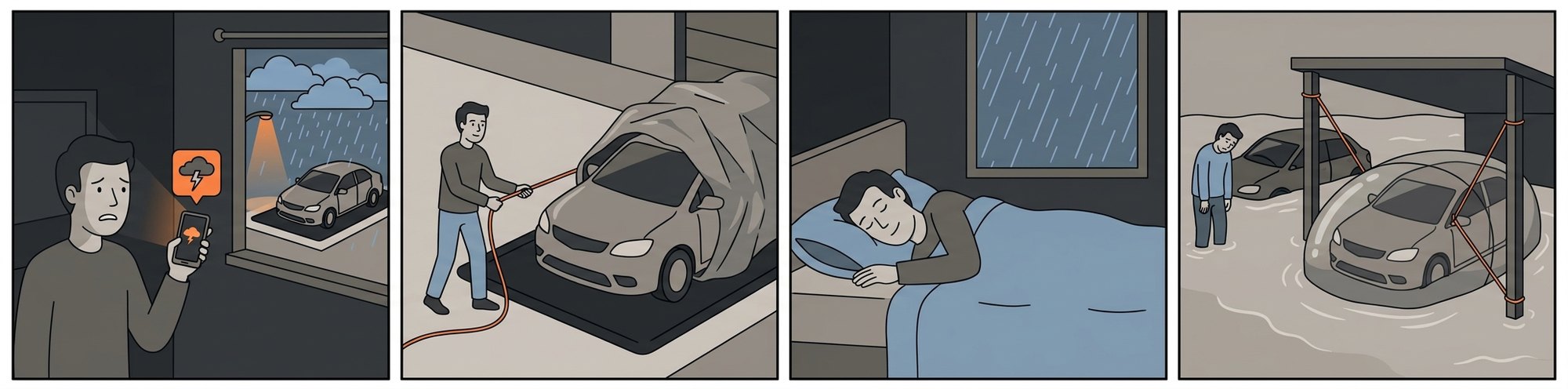
Thin is the point. A hull does not survive water by being thick — pressure is balanced by flotation, which is how sub-millimeter raft skins run Class V rapids. The thickness lives in the mat, where the wear is.
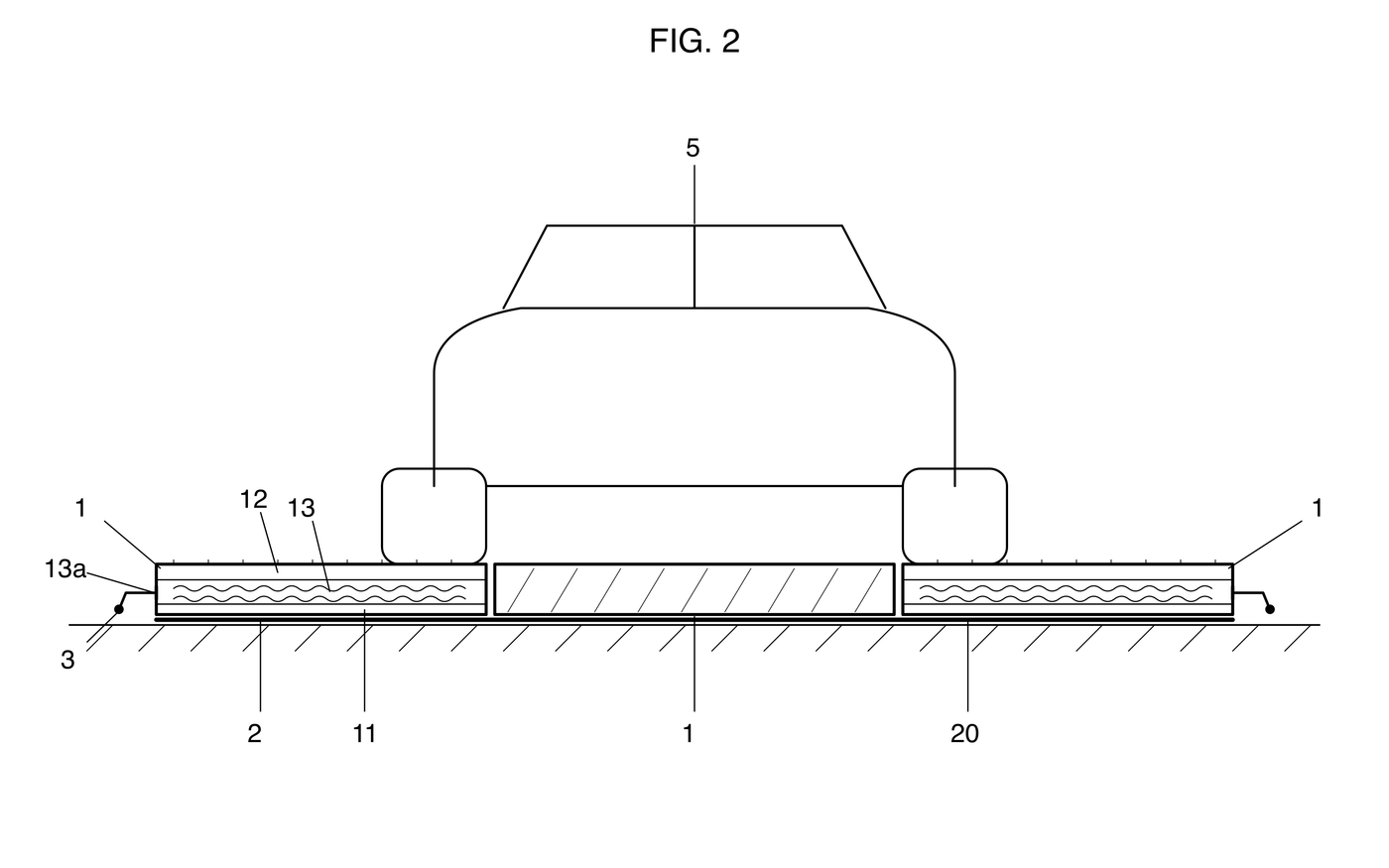
Everything below the waterline is a single 0.5 mm PVC pan joined only by welding. No stitching means no needle holes to seep through.
The lightweight upper fabric joins the pan 40 cm (16 in) above ground — higher than the floating waterline, where it never carries water pressure.
The drawcord cinch rides about a meter above the water. It lives in the splash zone, not the pressure zone.
Internal ribs interrupt the free-surface effect known from naval architecture, and four corner moorings let the float rise with the water without drifting.
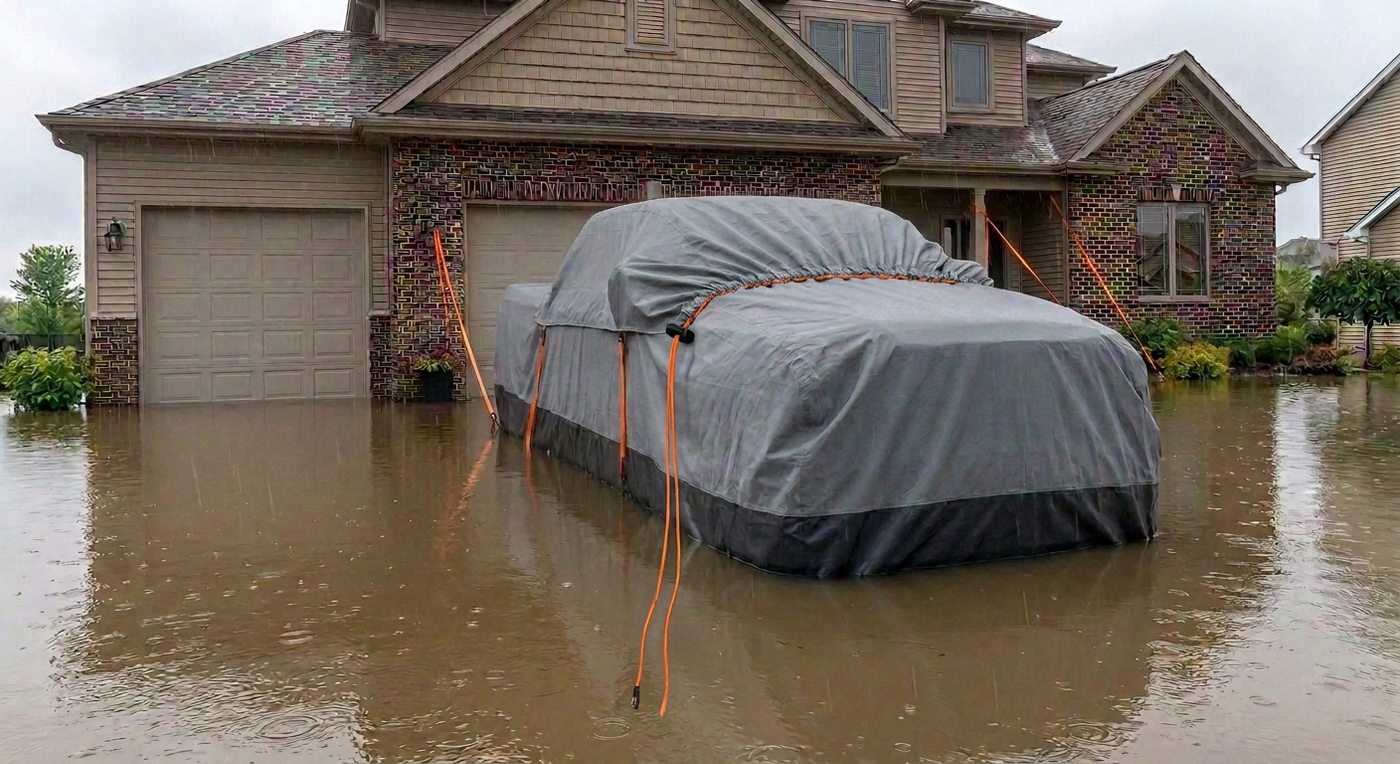
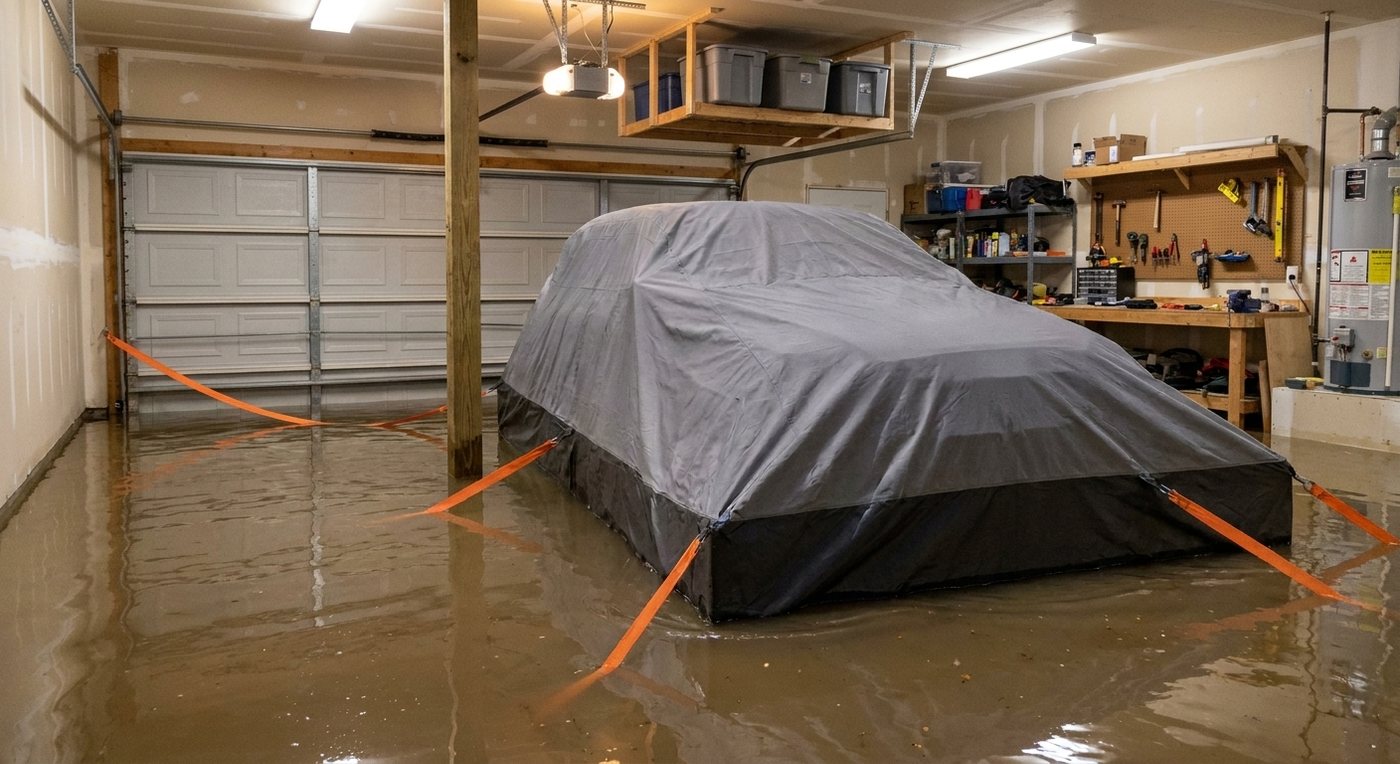
| S — Compact | M — Sedan / minivan | L — Full-size SUV / pickup | |
|---|---|---|---|
| Footprint | 13.8 × 6.2 ft 4.2 × 1.9 m | 16.4 × 7.5 ft 5.0 × 2.3 m | 19.0 × 8.2 ft 5.8 × 2.5 m |
| Mat | 15 mm three-piece rubber mat, tapered drive-over edges, anti-slip surface | ||
| Hull (underwater) | 0.5 mm UV-stabilized PVC tarpaulin, welded construction only | ||
| Upper wall & roof | 75D PU-coated ripstop polyester (2,000 mm), sewn and seam-taped above the waterline | ||
| Closure | Perimeter drawcord with cord locks; roof flap with 50 mm hook-and-loop fastening | ||
| Mooring | Four D-rings welded to the PVC hull corners, with long removable straps — reach nearby posts or trees; screw-in lawn anchors optional | ||
| Deployment | About 3 minutes, one person. No tools, pump, or electricity | ||
Values are design targets for the first production run and may be refined through prototype testing. Utility model registration applied for in Japan, August 2026.
The goal is a storm season where the morning after is a cleanup — not a total loss.
Reservation is free and non-binding. You get launch pricing, first allocation from the initial production run, and footage from our flotation testing as it happens. Ships worldwide from Japan.
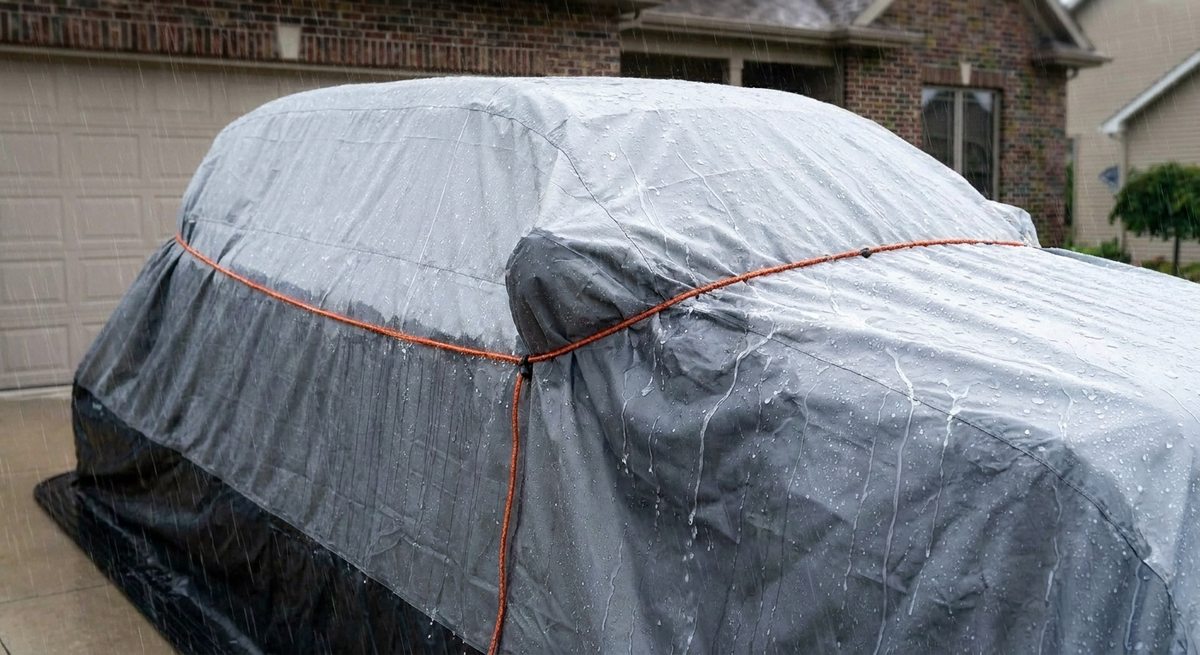 The cinch and roof flap close the top against rain — water sheds off the taut fabric the way it sheds off a tent fly. The small amount that may get in pools at the bottom, where internal ribs keep it from sloshing and destabilizing the float. A drain port empties it afterward.
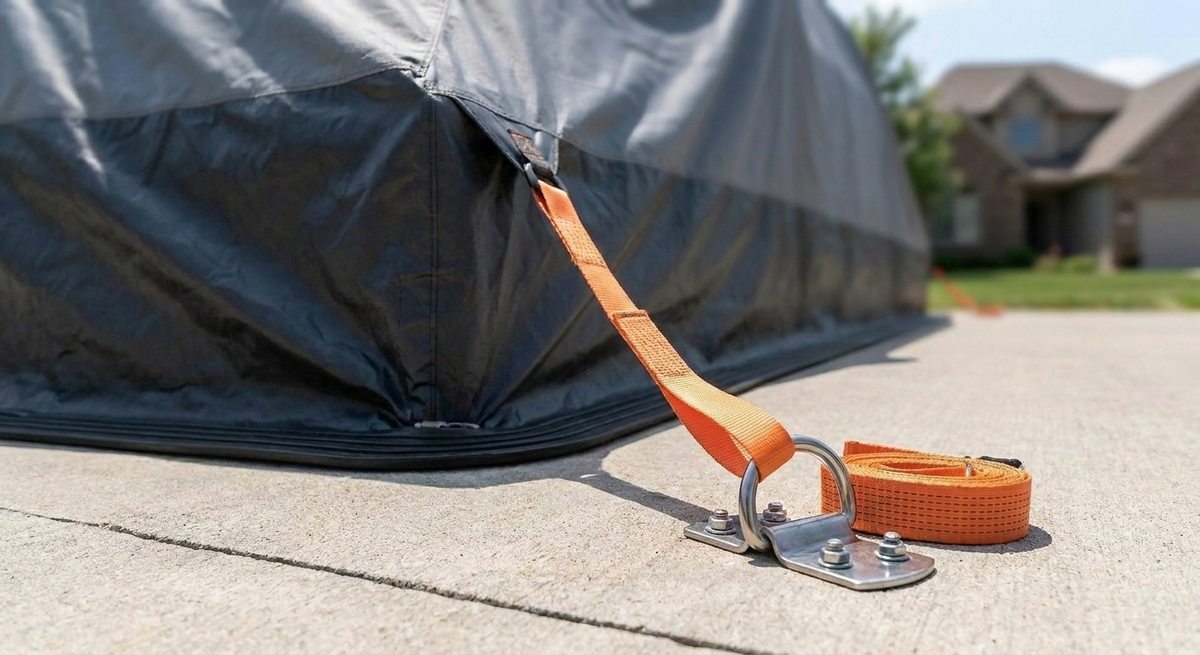 Usually, to very little. Neighborhood flooding is mostly pooled, still water — there is almost no current in a driveway, so the raft rises in place and settles back down where it started. If you want it held anyway, the long corner straps reach anything solid nearby: a porch or deck post, a fence post, a tree. No posts at all? Twist a screw-in ground anchor into the lawn beside the mat — the same kind used for dog tie-outs, installed by hand in under a minute. The critical rule: the slack is the flood depth. Each strap ships at 4 m and you leave the whole surplus coiled on the ground, so the raft can climb the full height of the flood before the line ever comes tight. A short or taut line would hold the raft under — the one way to make it fail.CarRaft reads as a plain black parking mat — the same product class as garage floor mats, which HOA rules generally do not touch. And where driveway standards are strict, put it in the garage instead. Garages flood constantly — a low door threshold lets water straight in — and CarRaft deploys and floats indoors exactly the same way, with the straps clipped to the door track or a support post.
Harvey put roughly half a million cars underwater. Valencia 2024, over a hundred thousand. Dubai 2024 drowned garages full of luxury cars. Every event triggers weeks of high-intent demand — and there is no category leader to absorb it.
Payouts come after the car is gone, while tow trucks, body shops and rental fleets stay jammed for weeks. A $135 device against a five-figure, weeks-long loss is the easiest value story in the accessory aisle.
One cord, three minutes, and a car floats. The product is native to short video, showroom floors and disaster-prep fairs — the demo is the ad.
Patent-pending in Japan with the international priority window open, in a new “always-installed” category with no incumbent.
Three sizes cover the market; anchor kits and replacement bags attach naturally; modules flat-pack for freight.